A Historic Political Milestone in India’s Democratic Journey
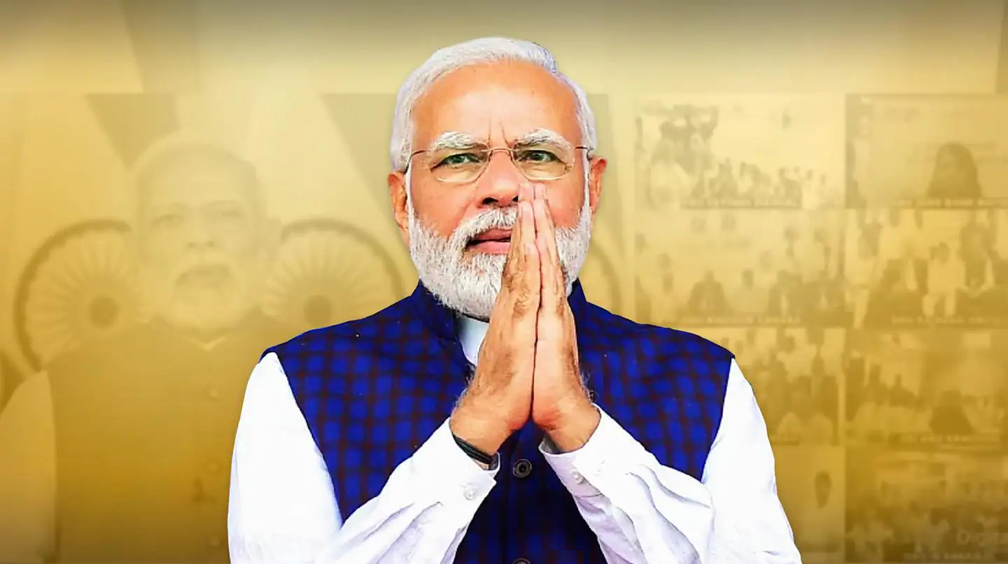
Today marks an important milestone in India’s democratic history. PM Narendra Modi has surpassed Jawaharlal Nehru in tenure as the Prime Minister of India. Yet, this moment signifies far more than political longevity. It reflects a larger national transformation. Over the past decade, India has moved from aspiration to execution. The country has begun scripting the story of a “New India” while steadily advancing toward the vision of a “Viksit Bharat” – A developed and self-confident nation by 2047.
From Policy Paralysis to Purposeful Governance
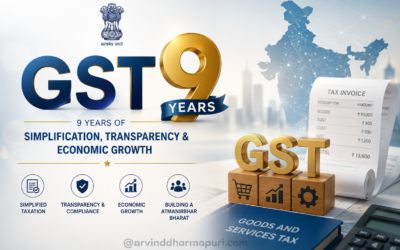
India entered a new phase in 2014 when PM Narendra Modi took the oath as Prime Minister. The country demanded decisive leadership, cleaner governance, and faster development. The response was a governance model focused on delivery, accountability, and national ambition. Several structural reforms reshaped India’s policy landscape. The government expanded financial inclusion through the Pradhan Mantri Jan Dhan Yojana, strengthened welfare delivery through Direct Benefit Transfer (DBT), introduced the Goods and Services Tax (GST) to create a unified national market, and implemented the Insolvency and Bankruptcy Code (IBC) to improve financial discipline.
Unlike earlier eras, governance today is increasingly measured by implementation rather than announcements. Roads, railways, airports, logistics corridors, and digital infrastructure have expanded at unprecedented speed. Citizens now expect measurable outcomes rather than promises.
Infrastructure-Led Growth: Building the Foundation of a New India
Infrastructure development has emerged as one of the defining features of India’s growth story over the past decade. Massive investments in highways, expressways, railway modernisation, metro networks, airports, ports, and digital connectivity have strengthened India’s economic backbone. Programs such as PM Gati Shakti and the National Infrastructure Pipeline have sought to improve coordination and accelerate project execution. Improved infrastructure is not merely about connectivity. It enhances productivity, attracts investment, creates employment opportunities, and supports long-term economic growth.
Building an India That Believes in Itself
A “New India” is not defined solely by economic indicators. It is also characterised by confidence in its own identity, capabilities, and aspirations. Under PM Narendra Modi’s leadership, India has demonstrated stronger national self-belief on both domestic and international platforms. The country no longer hesitates to assert its strategic interests and has adopted a more confident foreign policy approach.
From strengthening partnerships through the Quad to championing the concerns of the Global South, India increasingly shapes global conversations rather than merely participating in them. The successful G20 Presidency further showcased India’s growing diplomatic influence. The Chandrayaan-3 mission strengthened national pride by proving that India can achieve complex technological milestones with remarkable efficiency and innovation.
Cultural Renaissance and Civilizational Confidence
India’s development journey has also been accompanied by a renewed emphasis on cultural heritage and civilizational identity. Projects such as the Kashi Vishwanath Corridor and the Ram Mandir in Ayodhya have resonated deeply with millions of Indians. For many citizens, economic development and cultural resurgence are no longer viewed as separate pursuits but as complementary aspects of national progress. This growing sense of civilizational confidence has become an important element of India’s evolving national identity.
Welfare Delivery at Scale: Technology-Driven Governance
One of the most significant transformations of the past decade has been the way welfare reaches citizens. The Modi government has emphasised last-mile delivery, technology-driven governance, and transparency. Flagship initiatives such as Ujjwala Yojana, PM Awas Yojana, Jal Jeevan Mission, Ayushman Bharat, and Swachh Bharat have addressed critical everyday challenges faced by ordinary Indians.
The expansion of sanitation facilities under Swachh Bharat improved hygiene and dignity, particularly for women. Digital governance systems have reduced leakages, improved efficiency, and enhanced transparency across welfare programs. Today, benefits increasingly reach citizens directly without intermediaries, strengthening trust between the government and the people.
The Economic Vision Behind Viksit Bharat 2047
The vision of “Viksit Bharat” represents the next phase of India’s national journey. It is a long-term roadmap aimed at transforming India into a developed nation by 2047, the centenary year of independence. Achieving this vision will require sustained economic growth, manufacturing expansion, innovation, energy security, and investment in human capital.
Flagship initiatives such as Make in India, Startup India, Digital India, Production Linked Incentive (PLI) schemes, and semiconductor manufacturing investments are designed to strengthen India’s economic foundations and enhance global competitiveness.
The goal is not merely to become a larger economy but to build a more resilient, innovative, and inclusive one.
Atmanirbhar Bharat: Strengthening National Capability
A key pillar of the Viksit Bharat vision is self-reliance.
India has intensified efforts to strengthen domestic capabilities in defence manufacturing, technology, electronics, and strategic industries. The Atmanirbhar Bharat initiative reflects the belief that a strong nation must reduce critical external dependencies while expanding indigenous capacity. The growing focus on domestic production, innovation, and strategic autonomy aims to position India as both a major manufacturing hub and a trusted global partner.
PM Narendra Modi Surpassing Nehru: Symbolism and Significance
PM Narendra Modi surpassing Jawaharlal Nehru in tenure carries considerable symbolic significance in India’s democratic journey. It reflects political continuity, democratic maturity, and evolving public expectations.
However, history ultimately evaluates leaders through outcomes rather than tenure alone. The larger significance of this milestone lies in the transformation India has experienced during this period and the direction in which the country is moving.
Conclusion: From New India to Viksit Bharat
The story of the past decade reveals a clear trend. India has become more ambitious, more confident, and increasingly development-oriented.
The journey from “New India” to “Viksit Bharat” is still a work in progress. Significant challenges remain, including employment generation, income growth, education, healthcare, and sustainable development. Yet the country moves forward with greater clarity, stronger institutions, and renewed confidence in its own potential.
India no longer dreams cautiously. It dreams boldly. More importantly, it increasingly believes that those dreams can be transformed into reality.
As the nation looks toward 2047, the vision of Viksit Bharat represents not only a policy objective but also a collective aspiration to build a prosperous, self-reliant, confident, and globally respected India.
Read More : Narendra Modiji’s 17 Prestigious Honors: A Legacy of Leadership and Global Impact