How the Modi Government Delivered India’s Biggest Promise to Women
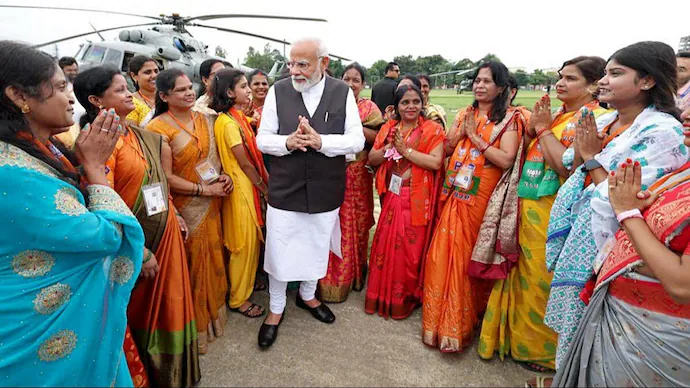
India has made many promises to its women over the decades, especially under the Modi government. These were promises of equality, dignity, and a real voice in how this country is run. For 27 years, one of those promises sat undelivered: the Women’s Reservation Bill. Under PM Modi’s leadership in 2023, the Nari Shakti Vandan Adhiniyam finally became law. With it, India took what may be its most significant democratic step since Independence. This is not just a political achievement; it is personal. It concerns every woman in our society, from the daughter who topped her class to the entrepreneur who built a business from scratch but previously had little say in the decisions shaping her life.
A Long Wait That Should Embarrass Us
The story of this Bill is, frankly, a story of political failure, especially during the Congress government. Rajiv Gandhi tried to push local body reservations in 1989. It passed in the Lok Sabha but fell in the Rajya Sabha. In 1992–93, the 73rd and 74th Amendments at least gave women 33% reservation in Panchayats, and that was a genuine win.
But when it came to Parliament and State Assemblies, the story turned frustrating. The Bill was first introduced in 1996 under the Deve Gowda government, and it lapsed. The Vajpayee government reintroduced it multiple times between 1998 and 2003, but failed to pass it each time. In 2010, the UPA government passed it in the Rajya Sabha, but never brought it to a vote in the Lok Sabha. By 2014, it had lapsed again.
Twenty-seven years. Multiple governments and plenty of speeches, but no result. The reason was simple: a lack of political will. Previous governments feared electoral backlash and worried about the political cost of change. So they introduced the Bill, made noise about it, and quietly let it die.
In 2023, Prime Minister Narendra Modi’s government broke that pattern and passed the Constitution’s 106th Amendment Act.
What the Law Actually Delivers
The Nari Shakti Vandan Adhiniyam reserves one-third of all seats in the Lok Sabha and State Legislative Assemblies for women. It also includes sub-reservation for SC and ST women so the most marginalised are not left behind. Seats will rotate after each delimitation, ensuring that reservations do not stay locked in one geography forever.
Some critics called it a rushed, vote-hungry move, but the facts and data speak louder than the perception. A 2021 study found that a decade of Panchayat reservation led to a 143% increase in women independently choosing to contest elections. Of the 74 women MPs elected in 2024, most won on their own strength and merit. The idea that women in reserved seats cannot lead independently is simply not backed by evidence.
Others worried about southern states losing seats, but that is also wrong. The expansion follows a flat 50% increase for every state. Tamil Nadu goes from 39 to 59 seats. Telangana goes from 17 to 26. No state loses anything.
And yes, a Parliament of 816 members sounds large. But consider this: currently, one Indian MP represents roughly 17 lakh citizens. Even after expansion, that number only drops to about 11 lakh. Hence, India is underrepresented and a timely reform may bring more space for development and representation on a local level.
Other Women Friendly Policies Under PM Modi
This law is not just a single action by the Modi government. Over the past decade, the government built the conditions that make political participation meaningful for women. Ujjwala Yojana freed millions of women from the daily burden of cooking on smoky chulhas. Swachh Bharat gave women the dignity of a toilet at home. Jal Jeevan Mission brought water to the doorstep, saving hours of physical labour every single day.
Triple Talaq was abolished and maternity leave was extended. Beti Bachao Beti Padhao pushed back against the cultural preference for sons. Each of these moves addressed a different wall: health, safety, education, and opportunity.
A woman who is healthier, safer, and better educated still needs political power to protect those gains and demand more. That is what this Act delivers. Women are nearly 50% of India’s population and they deserve 50% of the voice in how it is governed. One-third is a start, and it is finally, after 27 years, a constitutional guarantee.
India’s women did not need charity; they needed the door opened. PM Modi is opening those doors through laws and policies that bring women to all fronts of society to lead.
Read More: PM Narendra Modi’s Masterclass in Statesmanship: India Stands Tall Amid Global Chaos