From Aspiration to Assertion: Modi’s Tour Signals the Rise of a Confident New India
As Narendra Modi wrapped up his tour of Jordan, Ethiopia, and Oman, it became evident that the visit was far more than a routine diplomatic engagement. It reflected the rise of a New India shaped by the vision of Aatmanirbhar Bharat—an India that no longer depends on others for direction or growth.
By strengthening its internal capabilities and achieving strategic independence, India today engages the world with confidence, negotiates as an equal, and shapes outcomes aligned with its national interests. The tour came at a time when India’s influence across Asia and Africa was steadily expanding—regions central to global trade, energy security, and geopolitical stability. The message delivered across capitals was clear: India has moved from aspiration to assertion.
India’s Growing Influence Across West Asia and Africa
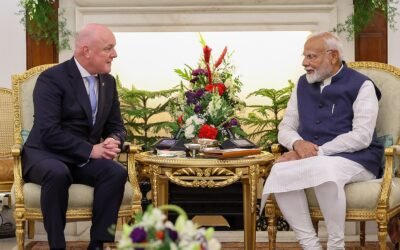
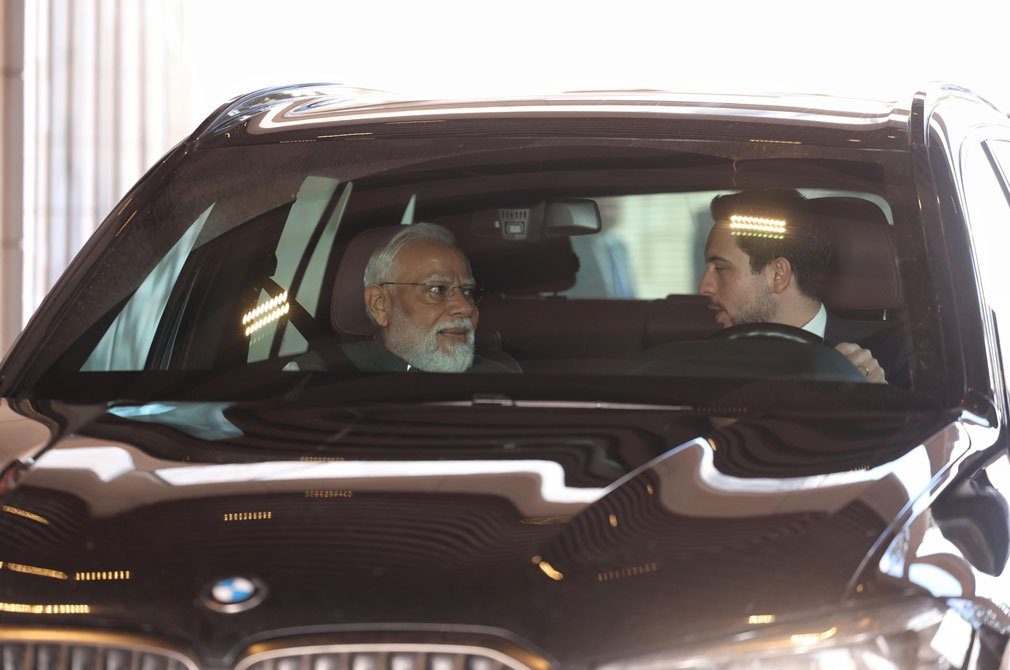
In Jordan, the Prime Minister highlighted shared civilizational roots and their relevance in contemporary cooperation. Deep historical and cultural bonds were reinforced, while new avenues opened in trade, security cooperation, technology, and water management.
The visit underlined India’s growing role as a trusted partner offering practical, solution-oriented engagement rather than abstract or ideological advice. As a result, India’s standing improved in a region seeking stability, reliability, and strategic balance.
The Prime Minister’s visit to Ethiopia further strengthened India’s engagement with Africa—a continent central to the future global order. India’s development-driven approach in education, skill development, digital connectivity, and peacekeeping stands in contrast to transactional or extractive models pursued by others.
Recognition of India’s Development Partnership in Africa
A significant moment during the Ethiopia visit was the decision to confer the country’s highest civilian honour upon Prime Minister Modi. This recognition carried deep symbolic value—not only acknowledging the Indian government’s sustained focus on Africa through its foreign policy, but also reflecting Africa’s appreciation of India’s constructive and partnership-based development engagement.
It marked a broader shift in how African nations perceive India—not merely as a diplomatic partner, but as a long-term collaborator in growth and capacity-building.
Agreements Reflecting India’s Rising Global Influence
The most substantial outcome of the tour emerged in Oman.
The establishment of the Comprehensive Economic Partnership Agreement (CEPA) marked a major milestone in India’s trade diplomacy.
Under this agreement, Indian exports to Oman were granted zero-tariff benefits, with more than 98 per cent of Indian exports to Gulf countries becoming eligible for zero-duty access. At a time when the global economy faces protectionism, trade wars, and supply-chain disruptions, Indian exports gained smooth and predictable access to Gulf markets through this bilateral framework.
The impact of the agreement extended well beyond trade figures. Multiple sectors benefited, and India strengthened its integration into global supply chains. The CEPA also enhanced India’s partnerships in energy, logistics, and trade across the Gulf Cooperation Council (GCC) region.
In an era of rising protectionism, securing zero-tariff access reflected strategic foresight. These tariffs were not merely economic concessions—they functioned as instruments of influence, enabling India to expand its economic footprint, deepen partnerships, and advance national interests globally. Trade policy was transformed into a tool of statecraft.
Diplomatic Prestige and Strategic Confidence
Diplomacy reached new heights during the tour as Prime Minister Modi received Oman’s highest national honour, adding to the growing list of international recognitions conferred upon him. Such honours—particularly from GCC nations—were rare for Indian leaders in the past. Their increasing frequency signals a clear shift in global perceptions of India’s leadership: trusted, respected, and influential.
Since 2014, India’s foreign policy has undergone a decisive transformation. The country is no longer viewed merely as a nation of untapped potential. It is now recognised as a power with defined objectives. Economic diplomacy blends with cultural confidence, strategic clarity aligns with national priorities, and global engagement proceeds without compromising sovereignty.
India’s rise under Narendra Modi’s leadership.
The three-nation tour, the zero-tariff CEPA, and the conferment of top civilian honours together narrate a larger story—India’s rise under Narendra Modi’s leadership.
By the conclusion of the tour, India stood taller on the global stage. It did not seek validation; it earned respect. The message to the world was unmistakable: India will not merely follow global trends—it will help shape them.
India’s ascent is no longer a distant aspiration. It has become a visible and living reality of the present era.
Read More: PM Modi’s Vande Mataram message : Reclaiming Courage, Reclaiming India