Revival of an Ancient Art: The Birth of INSV Kaundinya
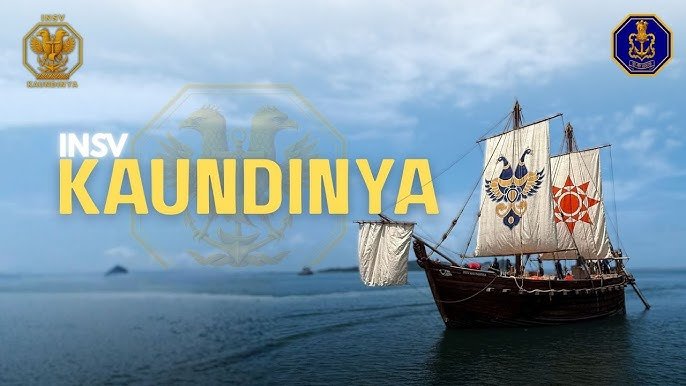
In September 2023, an incredible tale started to take shape in the ancient shipbuilding yards of Mandvi, Gujarat. Through a special partnership between the Indian Navy, the Ministry of Culture, and the Archaeological Survey of India, craftsmen brought back a centuries-old shipbuilding method. The 28-meter wooden sailing vessel INSV Kaundinya was built entirely by hand using the age-old “stitched-plank” technique, which involved sealing teak planks with traditional oils and resins and using coir ropes instead of nails.
The project sought to demonstrate that India’s ancient maritime engineering could still conquer modern seas, drawing inspiration from depictions of ships in the Ajanta Caves from the fifth century. On December 29, 2025, Kaundinya embarked on her first international journey by slipping into the waters near Porbandar, the birthplace of Mahatma Gandhi. She carried not only sails but also the weight of history under the command of Commander Visas Sheoran and a crew of highly qualified Indian Navy personnel.
Tracing the Footsteps of Ancestors: The Historic Route
The chosen path was deliberate. INSV Kaundinya retraced the ancient maritime trade routes that once linked the Indus Valley ports, such as Lothal in Gujarat, with the ancient land of Magan—modern-day Oman. Over 4,000 years ago, Indian merchants exchanged cotton, spices, and ivory for Omani copper and frankincense. These voyages fostered deep cultural and commercial ties that shaped both civilisations. INSV Kaundinya became a floating monument to India’s dominance in the Indian Ocean trade long before European settlers arrived by traversing these abandoned sea lanes across the Arabian Sea. From the Chola expeditions to Southeast Asia to the flourishing dhow trade networks, the journey represented continuity and served as a reminder that the sea has always been India’s route to the rest of the world.
Endurance on the Open Sea: The 17-Day Odyssey
For 17 days, the crew relied solely on wind, stars, and traditional navigation. No engines, no GPS—only the creak of wooden planks and the rhythm of the waves. The stitched hull flexed with the sea rather than fighting it, demonstrating the ingenuity of ancient design. Favourable winds were interspersed with trying calms, but INSV Kaundinya was a hardy vessel with elegant lines. Commander Sheoran has quoted that it was a humbling experience because, despite being in harsh weather, the ship handled very well. The journey was as much about rediscovering human skill and resilience as it was about reaching a destination.
A Warm Embrace in Muscat: The Grand Welcome
On January 14, 2026, Port Sultan Qaboos in Muscat came alive with celebration. As Kaundinya approached, Omani fireboats escorted her with spectacular water salutes arching over her decks. On shore, India’s Union Minister of Ports, Shipping and Waterways, Sarbananda Sonowal, joined Omani dignitaries for an emotional welcome ceremony. Minister Sonowal called the arrival a ‘shining example’ of Prime Minister Narendra Modi’s vision to revive India’s maritime heritage while strengthening contemporary partnerships. The event underscored the enduring people-to-people connections between India and Oman, rooted in centuries of shared history.
A Living Bridge: Past, Present, and Future
INSV Kaundinya represents much more than just a vessel because it symbolically commemorates the craftsmen who rediscovered traditions that had been lost for a very long time, the seafarers who put faith in them, and the invincible spirit that binds two seafaring countries together. In a time dominated by steel hulls and satellite navigation, she makes references to India’s golden maritime era and suggests a confident oceanic future. Kaundinya brings with her a powerful message as she rests in Muscat, with further expeditions looming on the horizon. Heritage,e by definition, is a means by which a nation’s future could be advanced and is often conserved in museums rather than remembered. This embroidered watercraft has woven a fresh stitch into the tapestry of Indo-Omani Amit,y ranging from historic ports of Gujarat to the welcoming ports of Oman.
One stitch, one sail, one wave at a time, India is reclaiming its seat as a maritime power.