A Landmark Moment in India’s Economic Diplomacy
One of the defining moments in India’s modern economic diplomacy was the signing of the India–EU Free Trade Agreement (FTA) on January 27, 2026. Often described as the “mother of all deals,” this comprehensive agreement resolves long-standing trade barriers and geopolitical pressures while granting Indian exporters access to 27 European markets.
Under Prime Minister Narendra Modi’s leadership, India has forged a balanced strategic partnership that withstands external pressure and promises a significant export boost of ₹6.4 lakh crore, benefiting multiple sectors and regions across the country. The India–EU FTA 2026 represents a major milestone in India’s global trade strategy.
Overcoming Deep-Rooted Trade Bottlenecks
For years, negotiations between India and the European Union remained stalled due to complex issues such as tariff disparities, non-tariff barriers, and differing regulatory standards. High duties on Indian exports—including textiles, leather, marine products, and gems—limited market entry.
Concerns regarding sanitary and phytosanitary (SPS) measures, technical barriers to trade (TBT), and environmental regulations like the Carbon Border Adjustment Mechanism (CBAM) further contributed to uncertainty.
The India–EU trade agreement addresses these bottlenecks by gradually eliminating and reducing tariffs. More than 99% of Indian exports by trade value now receive preferential access, with immediate zero-duty treatment for 90.7% of exports in labour-intensive sectors such as textiles, apparel, leather, footwear, marine products, gems and jewellery, and handicrafts.
Regulatory cooperation is a cornerstone of the agreement. It simplifies customs procedures, enhances transparency in standards, and strengthens collaboration on SPS and TBT frameworks. Provisions related to CBAM include technical assistance, financial support for emissions reduction, and compliance mechanisms to ensure India can transition without undue disadvantage.
These reforms eliminate unpredictability, deepen economic integration, and create a stable and fair trading ecosystem between India and the EU.
Standing Firm Against Geopolitical Pressures
The agreement comes at a time when global trade is facing heightened uncertainty, particularly due to tariff pressures from the United States under President Donald Trump. Additional duties on Indian goods—linked to energy imports and broader protectionist policies—were intended to influence India’s strategic positioning.
Rather than yielding to pressure, India accelerated diversification and strengthened economic resilience. The India–EU FTA offsets external constraints by opening a vast alternative market, reducing overdependence on any single trading partner, and reinforcing global supply chain stability.
By securing preferential access to a market representing nearly a quarter of global GDP, India reaffirms its commitment to strategic autonomy. The agreement also addresses European supply chain vulnerabilities by building a reliable partnership grounded in shared democratic values and long-term interests.
This approach transforms geopolitical challenges into economic opportunities while safeguarding national priorities.
Empowering States and Key Sectors Across India
The benefits of the India–EU FTA extend beyond macroeconomic gains and directly impact India’s diverse regional economies. Labour-intensive sectors employing millions stand to gain from reduced or eliminated tariffs.
Textile and apparel exporters will benefit from zero-duty access to the EU market, enhancing competitiveness against global rivals. Leather and footwear exporters from cities such as Kanpur and Agra, along with seafood producers in coastal regions, will gain from tariff reductions of up to 26% in certain categories.
Uttar Pradesh is poised for growth in leather goods, furniture, handicrafts, electronics, and agricultural products, generating employment in Kanpur, Agra, Saharanpur, and Noida. Punjab’s MSMEs in Ludhiana and Jalandhar will expand in garments, knitwear, and sports goods manufacturing.
Maharashtra stands to benefit in textiles, pharmaceuticals, gems and jewellery, and electronics—particularly in Mumbai and surrounding regions. Gujarat’s strengths in chemicals, engineering goods, Surat textiles, and marine exports from Veraval will receive a strong boost.
Southern states—including Tamil Nadu, Karnataka, Andhra Pradesh, Telangana, and Kerala—will expand through apparel, leather, engineering, pharmaceuticals, electronics, spices, and seafood exports. Rajasthan’s handicrafts, jewellery, and furniture industries will find new markets, while Assam’s tea and bamboo products and West Bengal’s Darjeeling tea and seafood exports gain enhanced access.
The agreement promotes inclusive growth by supporting MSMEs, artisans, farmers, women entrepreneurs, and youth, integrating local industries into global value chains.
Prime Minister Modi’s Strategic Leadership
At the core of this milestone is the leadership of Prime Minister Narendra Modi. His government’s emphasis on strategic autonomy, calibrated diplomacy, and balanced global partnerships transformed prolonged negotiations into a historic trade agreement.
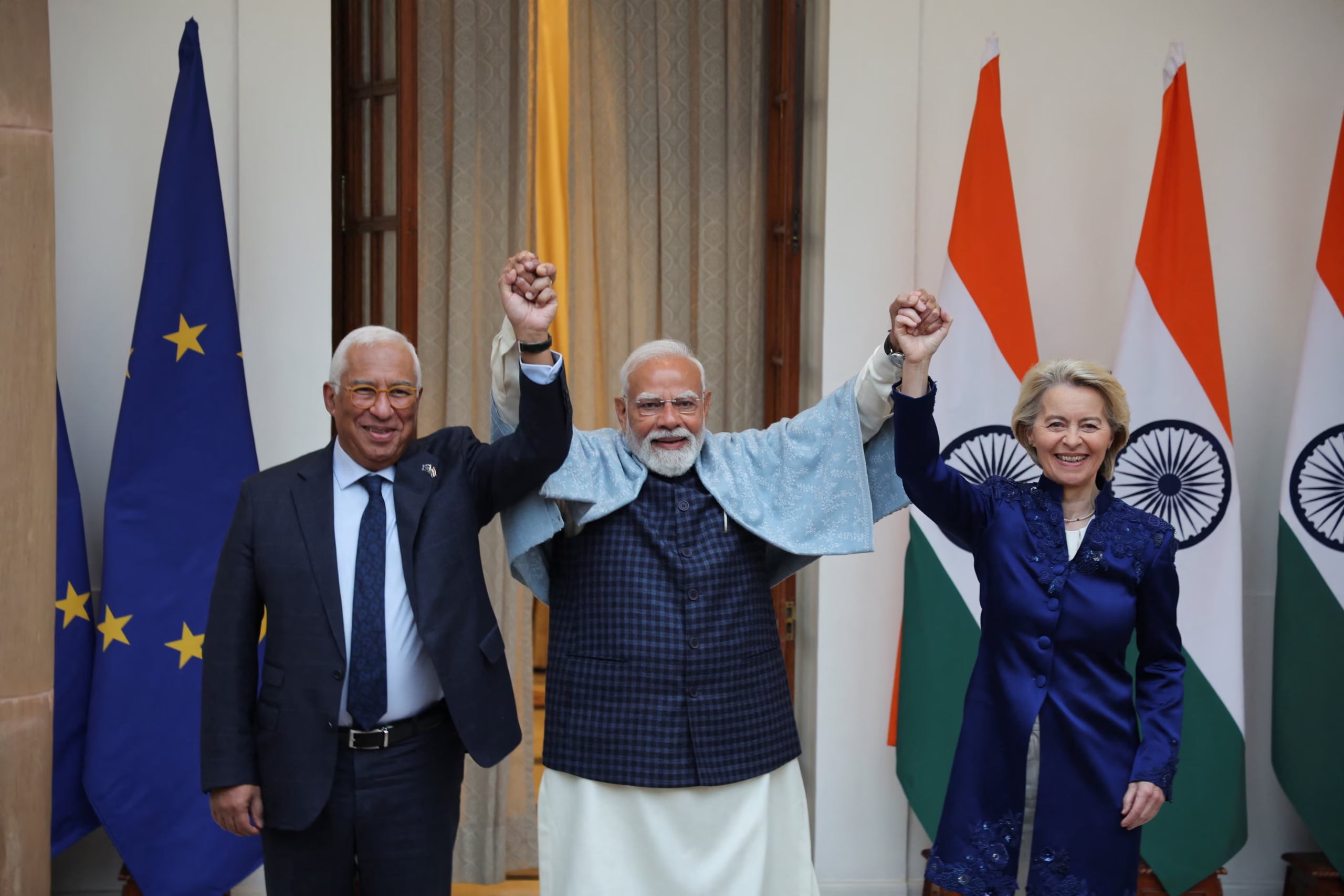
Jointly announced with European Commission President Ursula von der Leyen at the 16th India–EU Summit, the FTA reflects sustained diplomatic engagement, institutional trust-building, and principled negotiation.
Union Minister Piyush Goyal described it as a defining moment for India’s economic future, crediting Prime Minister Modi’s strategic vision for unlocking new opportunities, empowering India’s workforce, and advancing the goal of Viksit Bharat.
A New Chapter in India’s Global Economic Rise
The India–EU Free Trade Agreement is more than a commercial pact—it represents India’s evolution as a confident and decisive global economic power. By dismantling structural bottlenecks, resisting geopolitical pressure, and delivering measurable benefits across states and sectors, it lays the foundation for sustained prosperity.
Under Prime Minister Modi’s leadership, India continues to chart an independent and strategic course in a multipolar world, demonstrating that principled engagement and economic resilience generate long-term rewards.